Stronger intake discipline
Requests arrive with better context, cleaner briefs, and less avoidable back-and-forth before a decision is made.

Future AI works with premium service businesses that need stronger internal systems. We redesign how work is received, routed, decided, and delivered so teams can move faster without losing clarity, control, or client confidence.
Most engagements begin with a single high-friction workflow. We improve that first, then expand from a stronger base.
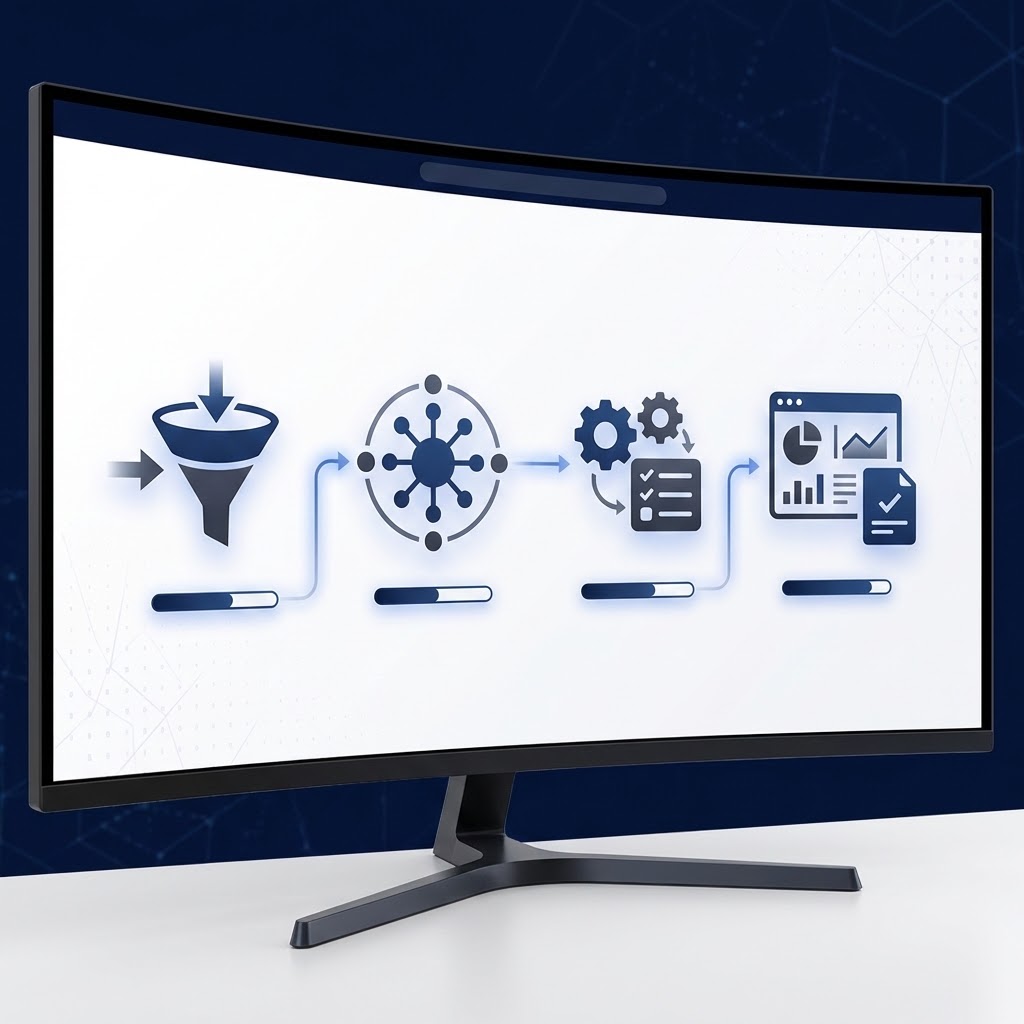
The objective is not more software. It is a clearer operating model: better inputs, cleaner handoffs, stronger visibility, and steadier execution.
The value is not abstract AI adoption. It is the measurable operational change that follows clearer workflow design.
Requests arrive with better context, cleaner briefs, and less avoidable back-and-forth before a decision is made.
Work moves through a clearer sequence: owners are visible, handoffs are tighter, and exceptions are easier to manage.
A business feels more credible when response times improve, follow-through is consistent, and delivery stops feeling improvised.
Leadership can see what is moving, what is blocked, and where intervention matters before small issues become expensive.
Every engagement starts from a commercially meaningful system, not a broad transformation promise.
We improve how opportunities, client requests, and internal work enter the business so decisions start from better information.
We map the workflow between a request and a delivered outcome, then remove the friction that slows teams down.
We introduce automation and AI where they improve speed or clarity, with controls that keep judgment and accountability visible.
Future AI is strongest when the business already has demand but needs a more reliable operating model behind delivery.
The work moves in visible stages so scope, decisions, implementation, and adoption stay clear from the start.
We identify where time, quality, or trust is being lost and define the business cost of it.
Inputs, decisions, ownership, approvals, and automations are translated into a cleaner operating model.
The system is built for real use, then documented and introduced so the team can actually run it.
Once the first workflow performs reliably, it becomes the base for the next operational improvement.
The objective is not to make operations look more advanced. It is to make them run with more clarity.
The difference is not tool selection. It is operational judgment: where to simplify, where to automate, and where leadership should keep control.
Recent writing stays visible on the homepage so visitors can see how Future AI thinks about workflow design, operational control, and production-grade systems.
Most intake automation fails because it captures messages, not decisions.
Most AI failures are operating model failures wearing a technical mask.
This section makes the Future AI offer easier to summarize, cite, and understand quickly.
Future AI redesigns intake, workflow, reporting, and governed AI systems for premium service businesses that need cleaner execution.
Future AI is strongest for founder-led or operator-led service firms where delivery quality, client confidence, and operational control matter commercially.
Future AI introduces AI inside workflows where it improves speed or consistency, while keeping approvals, escalation paths, and human judgment visible.
Future AI starts from the operating problem, not the tool. The focus is workflow design, governance, and measurable commercial outcomes rather than AI theatre.
We will help you scope the first move, define the milestones, and identify where process redesign, reporting, or AI will make a meaningful difference.